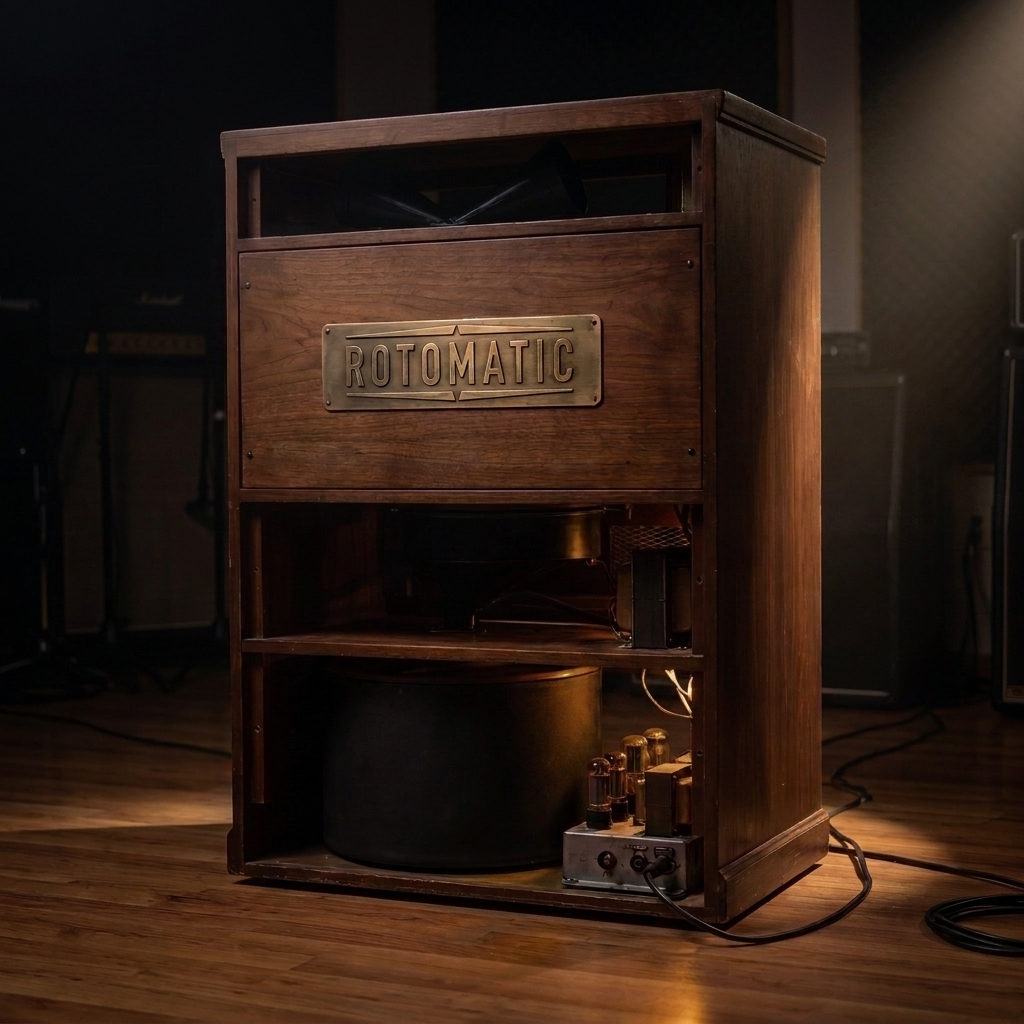
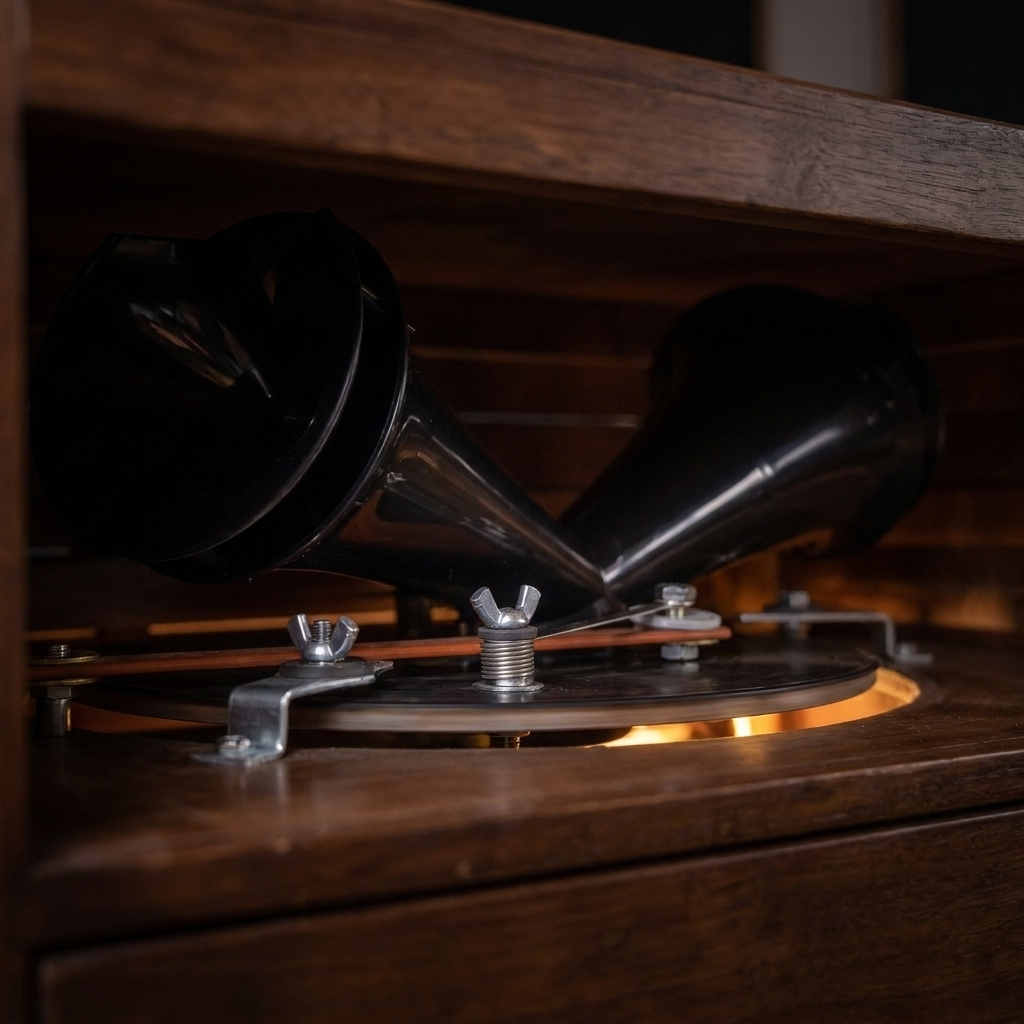
The horn rotor
Two opposing bakelite horns on a wooden platter, modelled with the throw, room reflection, and the moment when the horn passes the microphone — when the swirl turns into a chop.
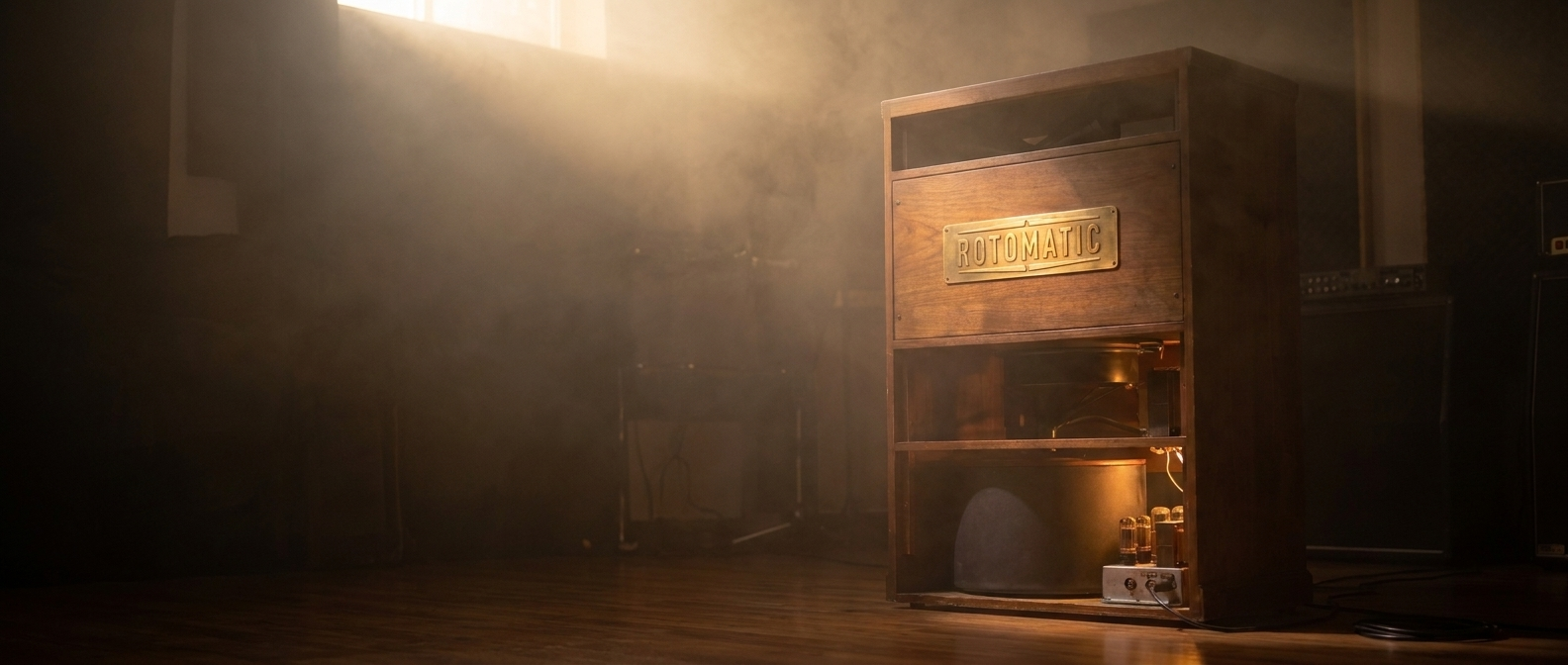
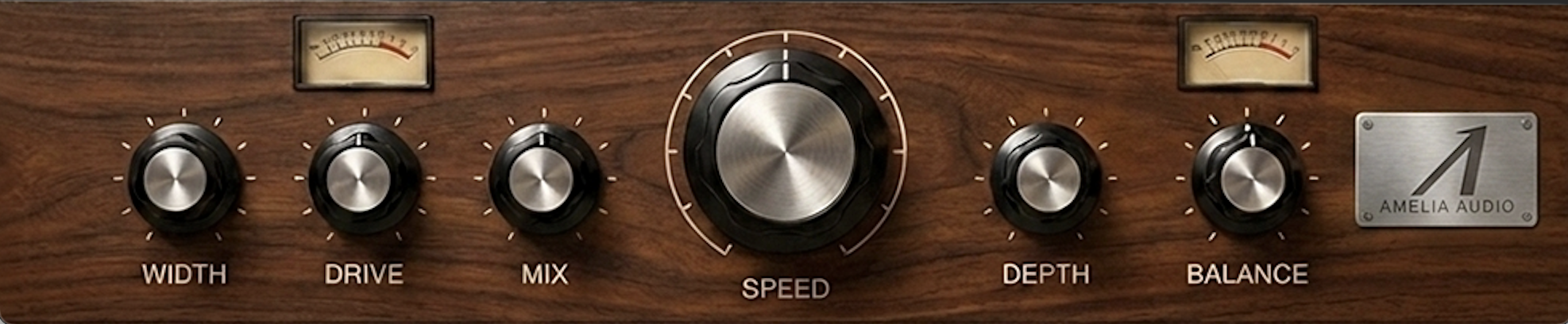
Two opposing bakelite horns on a wooden platter, modelled with the throw, room reflection, and the moment when the horn passes the microphone — when the swirl turns into a chop.
Pitch wobble and phase cancellation computed from the rotor's actual angular velocity past the mic capsule. No chorus, no flanger shortcut. The swirl is the consequence of the cabinet, not a side effect.
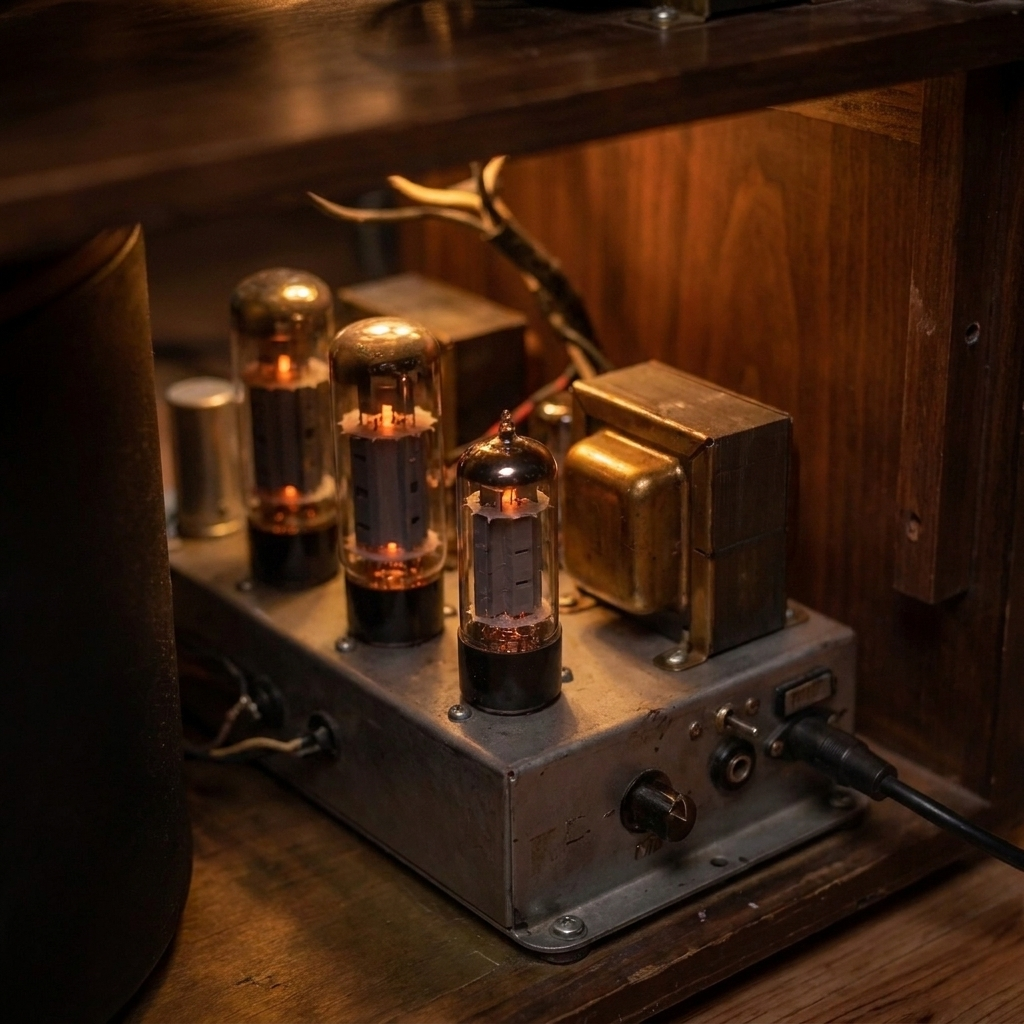
A 40-watt push-pull valve amp, modelled stage by stage. Clean at low drive, blooming through unity, sagging and singing when you push the front end past where you should. Used alone, a pure tube saturator.
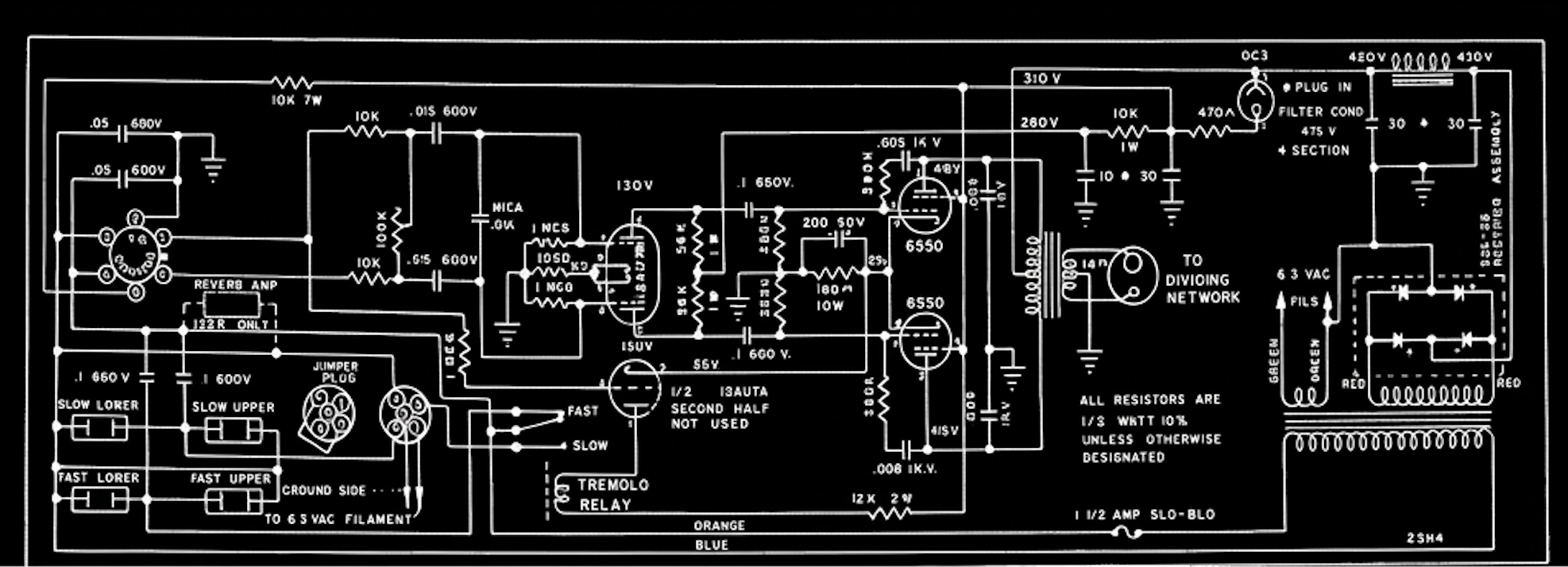
The classic 122-style amplifier and crossover — a single-ended driver stage, a push-pull valve output, a dividing network feeding the horn and drum motors. The full circuit, line by line.
Examples render at 24-bit / 48 kHz. Headphones recommended.
Buy once, install on two Macs, get every future update free.